
The Need for Nappe Aeration
In a suppressed rectangular weir, the nappe stretches from channel wall to channel wall. On the downstream side of the weir, the air under the nappe will become entrained in the nappe as it passes over it as it spills into the downstream channel.
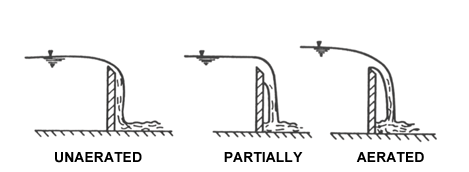
As the air becomes entrained, there will be less and less air under the nappe. This reduction of air under the nappe creates a pressure gradient. Ultimately the nappe collapses against the downstream face of the weir unless new air is allowed to replenish the entrained air.
Aeration and Weir Accuracy
Insufficient aeration, whether by poor sidewall geometry or insufficient vertical drop from the weir crest to the downstream water surface can increase discharge by as much as 25%, resulting in flow readings that are dramatically different than would otherwise be obtained by an aerated weir nappe.
Keeping the Nappe Aerated
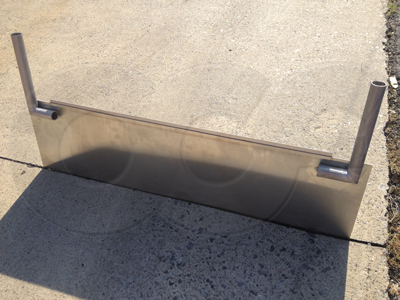
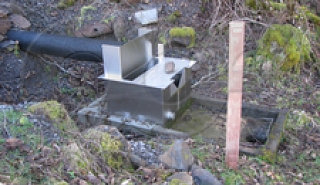
To avoid the nappe collapses against the face of the weir, air must be allowed to replenish that which is entrained by the nappe. The easiest way to do this is to place vents on both sides of the weir under the nappe.
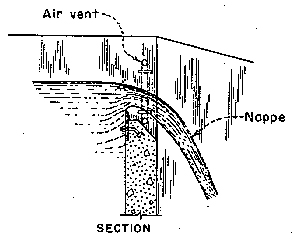
The top of the air vent must be higher than the maximum water level of the weir to ensure that the nappe stays aerated for all flows.