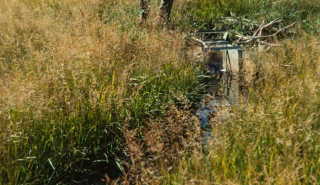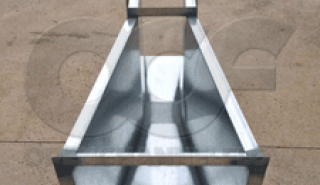

Irrigation flumes can be categorized into two groups: those used for Water Rights and those used to measure in-field flows (furrows).
Water Rights flumes are concerned with the overall apportionment of water from an irrigation canal / channel or some other source of surface water. Here a specific right to a set amount of water has been assigned to a user. It is incumbent upon the user to not only ensure that they use their full allotment, but also to ensure that they do not exceed their allotment.
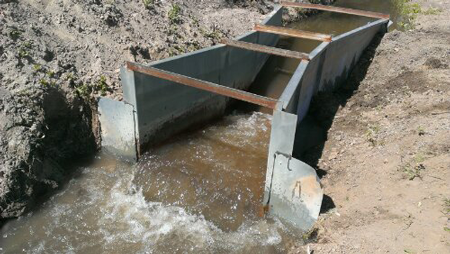
For Water Rights applications, Parshall and Cutthroat flumes are commonly used. These flumes are available in a wide variety of sizes / flow capacities and both were, in fact, specifically designed for irrigation flows. Their shapes can be adapted to the common shape of irrigation canal and channels with little difficulty and both flumes exhibit good usable flow ranges.
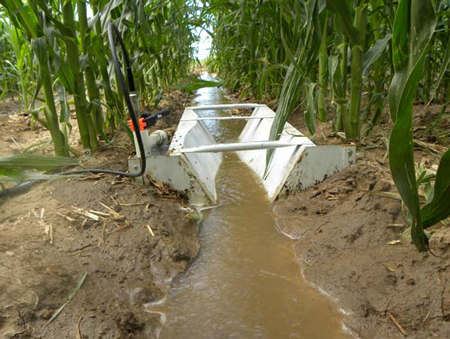
Furrow flumes, on the other hand, handle much smaller flows, either to or within a specific field of crops. The flows are much smaller than those involved in Water Rights and there tends not to be as much flexibility with the installation footprint. As a result, it is important that Furrow flumes be able to handle lower flows well, fit in the trapezoidal furrows between crop rows easily, and be able to transport sediments without clogging. Trapezoidal and RBC flumes both meet these requirements well and are the predominate types of flumes found in Furrow applications. Some Parshall and Cutthroat flumes are used for measure Furrow flows, but these tend to be small in size and are not as commonly used as Trapezoidal or RBC flumes.
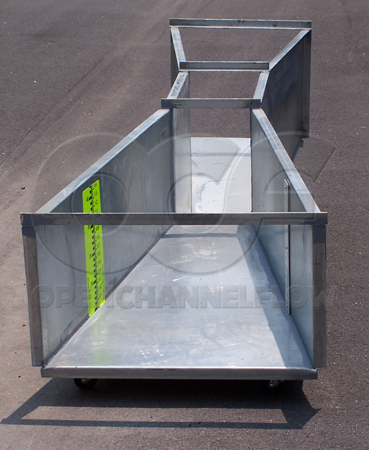
Water rights irrigation flumes are commonly made out of galvanized steel and, occasionally, fiberglass. The relatively simple shape of the Parshall and Cutthroat flumes used for this group of irrigation flumes lend themselves well to galvanized construction as there are no complex angles to worry about during fabrication. For fiberglass construction, where a dimensionally accurate master mold exists, the complexity or simplicity of construction isn't a factor. There the focus is on the suitability of the flume to the flow. Parshall and Cutthroat flumes cost more in fiberglass than in galvanized steel and as a result are less common.
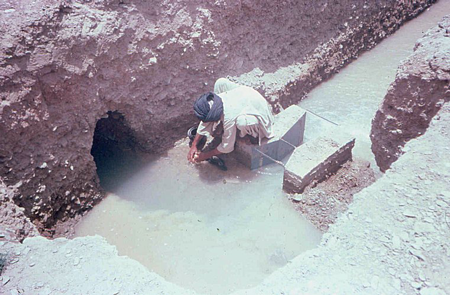
Furrow flumes, on the other hand, tend to be constructed from fiberglass. The more complex construction of the Trapezoidal (and to a lesser extent RBC) flumes mean that much of the material cost difference between galvanized steel and fiberglass is eaten up by the increase in production labor that galvanized construction requires or these flumes. Also, for these flumes, the dimensional tolerances are tighter as the flumes are both smaller and more complex than those used for the Water Rights. As a result, the ability to mold a flume from a dimensionally accurate master mold gives fiberglass construction a unique advantage.
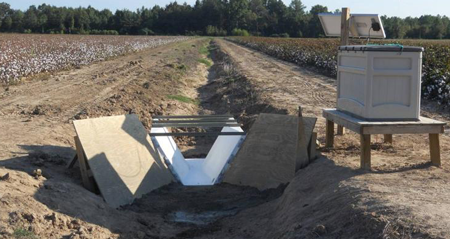
Images: Delta Conservation District, University of Arkansas - Division of Agriculture Cooperative Exentsion Service, Conservation Tillage Demonstation and Outreach Project - Colorado State University