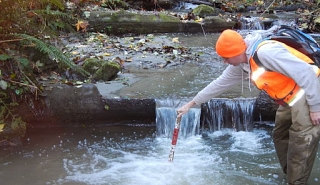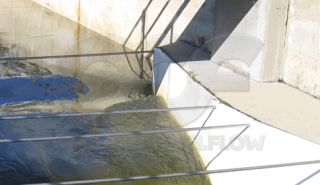

Parshall flumes should not be placed at an elevation lower than that of the channel being measured for fear of inadvertently inducing supercritical flow in the flume (and a hydraulic jump) in the flume. Field observations have shown that supercritical flows can result in the under-registering of flows by upwards of 40%.
When the upstream channel is steep and supercritical flow is present a hydraulic jump should be forced to occur. This jump should occur no closer than 30 Hmax (maximum anticipated head) of the flume.
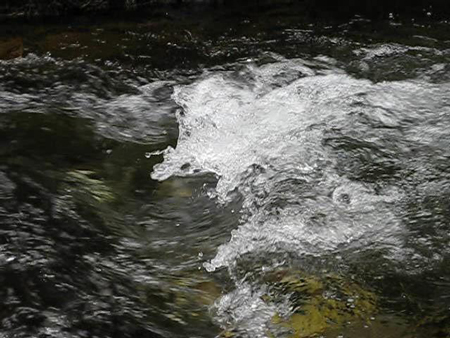
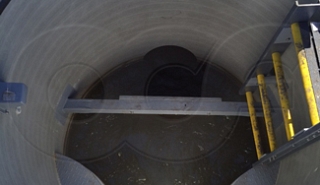
When it is not possible to naturally force a hydraulic jump upstream of the flume, an energy absorber with associated flow conditioner may be used. Energy absorbers are most practical when the approaching flow is piped and the energy absorber and flow conditioners can be pre-installed in a manhole or vault.
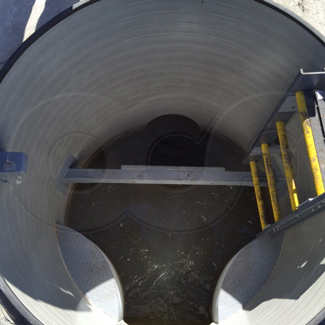
For an energy absorber to work, the flow must be able to expand into a chamber at least twice as wide as the approaching pipe or channel’s width. Once the supercritical flow enters the energy absorbers chamber it is usually direct to hit a baffle wall perpendicular to the flow stream. The energy is dissipated and then the water flows around the baffle and is conditioned or directed out the downstream pipe / channel.
While energy absorbing structures have proven to successfully slow flows back to a sub-critical state, they can generate turbulence. As a result they should be placed as far upstream of the flume as is practical or should be used in conjunction with flow straighteners, if possible.
Image: Wikipedia Commons
Source: A Guide to Methods and Standards for the Measurement of Water Flow