

No!
A common misconception surrounding Parshall flumes is that they must be installed in oversized channels and flow must be transitioned into / out of the flume through the use of wing walls.
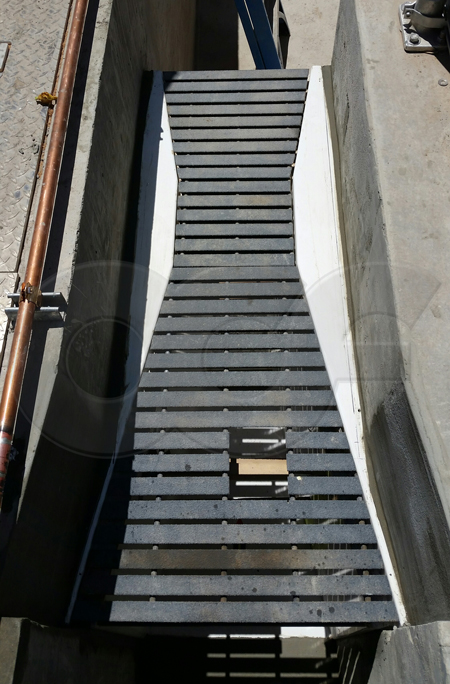
Generally, a Parshall flume only requires wing walls when the width of the flume is smaller than the channel width.
But this is not to say that Parshall flumes MUST be installed in oversized channels. It is quite common, and acceptable, for Parshall flumes to be installed in channels where the channel width is the same as the flume entrance width.
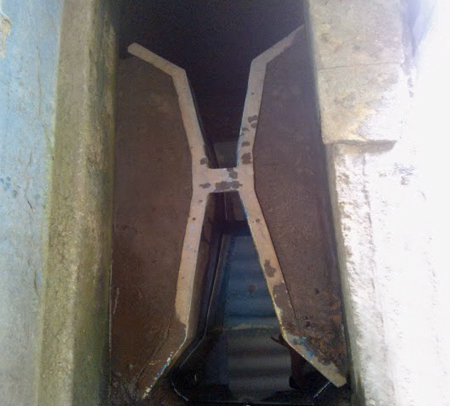
If wing walls are necessary to transition flow smoothly into a Parshall flume, the wing walls should be radiused and the not flat 45° walls commonly specified. Parshall flume research has shown that 45° flat inlet wing walls generate a standing wave and a wave trough downstream of the point of intersection between the wing wall and the flume wall. For the flume size investigated, at heads above 60% of the flume depth, the standing wave trough extends far enough downstream to markedly affect the head readings.
Additional information on the installation instructions of Parshall flumes can be found here.
Image: UMB Practica I
