

A common misconception is that flow must rise into a Parshall Flume for an installation to be correct.
Generally, raising a Parshall Flume above a channel floor is only necessary when:
- The floor of the channel is:
- Existing
- Cannot be modified
- and is of same general elevation over the length of site where the Parshall is to be installed
- The floor of the channel cannot be modified and does not allow for sufficient space / drop for the flume to be installed.
- The flume must be set above the floor of the channel to avoid submerging the flume.
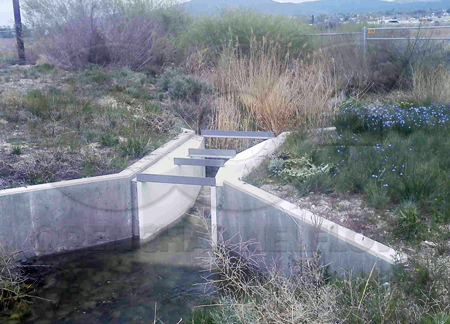
The initial development of the Parshall Flume saw the flume fitted to existing rivers, channels, and canals. In these applications, given the drop through the Parshall Flume (the outlet being lower than the inlet and the throat being lower than the outlet), the flumes needed to be raised above the floors of the channels into which they were installed. To avoid abrupt transitions of flows into the flumes, the 1:4 rise was specified.
Where the floor of the flume can be set level with the channel bottom - and where the downstream channel is at or below the elevation of the exit of the flume - there does not need to be a rise into the flume.
Note: When raising the flume above the floor of a channel, make sure to verify that the new upstream water level will not overtop the channel banks.
