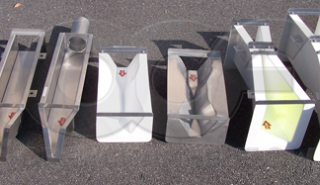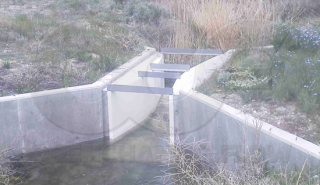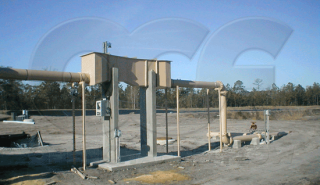

The selection of a primary device (weir or flume) for a particular open channel flow application typically can be broken down into three decisions:
- First – should a weir or a flume be used?
- Second – which style of weir or flume should be used?
- Third – which size of device should be used?
In this series of articles we will discuss each decision and the criteria that can be used to make a selection. In these discussions, where weirs are mentioned, the assumption is thin-plate / sharp-crested and where flumes are mentioned, short throated is assumed.
Selecting Between a Weir and a Flume
The first decision in selecting a primary device is whether to use a weir or a flume. Weirs and flumes each have their own advantages and disadvantages and understanding these can quickly help you decide between the two.
Weir - Benefits
A weir is the simplest device that can be used to measure open channel flows. Weirs can be low cost and the installation of the weir plate is generally easy.
Accuracy of thin-plate / sharp-crested weirs is +/-2% under laboratory conditions and V-notch style weirs can measure reasonably low flow rates (3.990 gpm [0.2518 l/s].
Another advantage that V-notch weirs have over flumes in general is that universal free-flow equations are available for V-notch weirs for any angle between 25 and 100 degrees – allowing for field correction of malformed weirs or tailoring of weirs for specific flow rates / site conditions.
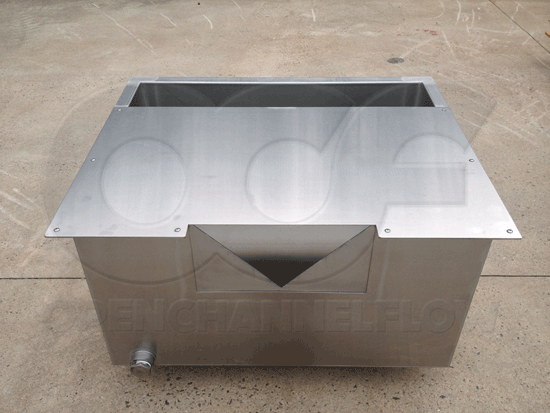
Weir boxes can be useful where flow is above ground and the flow of water is piped. Here the box configuration allows for pipe stubs, caulking collars, flanges, and free-spilling discharge into / out of the box.
Weir - Limitations
Although generally viewed as being more accurate than flumes, this is not always that case. RBC, HS / H / HL Type, and Trapezoidal flumes all can exhibit laboratory accuracies similar to weirs. Under field conditions, the nominal difference in accuracy between a flume and a weir becomes essentially irrelevant, as installation, calibration, and other errors tend to make overall site accuracies closer to +/- 10%.
Additionally, while weirs are commonly viewed as being better able to read flow rates down to zero, they do in fact need a relatively high minimum head (0.2-feet [0.0610 m] to ensure that the nappe springs clear of the weir crest. HS and H Type flumes in general and specific Trapezoidal flumes are able to accurately measure lower flows.
To ensure proper aeration of the nappe as it passes over the weir crest, the downstream water surface should ideally be 6-inches [15.24 cm] lower than the crest elevation. Insufficient aeration can increase discharge by as much as 25%.
V-notch weirs are limited to heads of no more than 2-feet [60.96 cm], while rectangular weirs (depending upon the styles / size) can have heads of up to 5-feet [152.4 cm] (not exceeding 1/2 of the crest length).
Also, while the installation of actual weir or weir plate can be relatively simple, this is not always the case for the upstream weir pool. A weir pool is a body of water upstream of the weir itself that serves to condition the flow as it approaches the weir itself. The point of measurement for a weir is in the weir pool itself and is located a minimum of three times the maximum head, Hmax, upstream of the weir. Undersized or malformed weir pools will result in poor velocity profiles and / or excess approach velocities, both of which degrade the accuracy of a weir. Weir pool requirement generally preclude the use of weirs in existing manholes and pipes (the Thel-Mar calibrated weir being a possible exception for pipe flows).
Finally, weirs require more maintenance than flumes. Sediments and debris collect behind the weir plate and will, over time, change the shape of the weir pool, which will adversely affect accuracy. Solids accumulation and ragging of the weir crest generally preclude the use of weirs in wastewater / sanitary applications – with the exception being treated effluent flows.
While normally a disadvantage, the collection of sediments is actually a benefit in some applications – most notably those involving seepage monitoring where sediment analysis can be an important part of determining the overall health of a dam.
The crest of the weir is also susceptible to damage, abrasion, and rounding. Any form of roughness will cause a weir to discharge more water than otherwise indicated so additional inspection and maintenance may be required depending upon the application.
Flume - Benefits
Flumes in general tend to be self-cleaning as the velocity of flow is high and there is no "dam" across the flow stream. Styles of flumes with elevated throats (notably Palmer-Bowlus and RBC) tend to be less so, but still perform considerably better than weirs in this respect.
The head loss of a flume for a given flow rate is approximately 1/4 of that required for a weir. Where a weir might overtop upstream channel banks, a flume may work quite well. in flat channel / low gradient applcations, this lower head loss can be a deciding factor.
Flumes can be provided with a wide array of flow measurement, conditioning, and controlling options integrated directly into them. The use of end adapters, approach sections, and bulkheads provide multiple locations in which to mount accessories, pipe stubs, etc. While many of these options can be provided with weir boxes, many of them cannot be provided is stand-alone weir plates.
With a variety of cross-sections avaialble, flumes can be readily integrated into trapezoidal irrigation channels (RBC and Trapezoidal), round pipes (Palmer-Bowlus and Leopold-Lagco), and rectangular channels (Parshall, Montana, and Cutthroat).
Flumes, even H Type, have much greater resistance to the effects of submergence. In many cases flow equations (while not particularly simply) are available to correct for the effects of submergence. Weirs, with the need for aeration of the nappe, have little resistance to increases in downstream water levels.
Flume - Limitations
Fabrication costs for flumes tend to be more than for weirs. More material is generally required to construct a flume than a weir, although actual fabrication / labor costs may be similar given the use of prefabricated molds for fiberglass constructed flumes. Weirs tend to be one-off productions so economies of scale do not usually apply.
The accuracy of flumes depends in part on the style of the flume. Some flumes have accuracies comprable to those of weirs (H Type and Trapezoidal - +/- 2-5%), some are slightly higher (Cutthroat - +/- 3%), while others are higher still (Parshall / Montana - +/- 3-5%). Palmer-Bowlus flumes are the exception here as their accuracy varies both by style and size (+/- 4-6%).
Installation costs for flumes tend to be higher than those for weirs. This is, of course, assuming that the upstream channel is suitable for a weir installation. The long straight run upstream of the weir crest and the specific shape of the weir pool may require considerable work - more than many realize. Parshall flumes tends to be the most expensive to install due the drop through the throat / discharge section of the flume. Some times the flume needs to be elevated and other times the downstream hydraulics need to be adjusted.
Where weirs tend to have simple flow equations (excluding compound weirs), flumes can have quite complex ones (H Type and Trapezoidal). Further essentially all flow meters for use on open channel flows come preprogrammed with discharge equations for weirs. Other than the Parshall (and by default the Montana flume), not all flume types are universally supported by flow meter manufacturers.
Up Next...
In the next article of this series we will cover: Choosing a Weir of Flume Style